Financial Inclusion and the Missing Question of Harm: An Open Letter from Microfinance Experts
An open letter and accompanying briefing notes, submitted on Friday, May 15 to the IFC Sustainability Framework Review and supported by 19 researchers and scholars (including leading experts on microfinance and household debt), call for borrower-related risks and impacts to be more systematically integrated into IFC’s Sustainability Framework, Guidance on Financial Intermediaries, risk categorization, and operational practice, highlighting concerns about how these risks and impacts are currently addressed in practice.
You can read the full submission here.
The core argument is that risks affecting microfinance and consumer credit borrowers remain insufficiently reflected in IFC’s operational approach to financial intermediary (FI) investments, despite the framework’s “do no harm” commitments particularly in relation to vulnerable populations.
The scale of IFC’s engagement makes this particularly consequential. In FY2025, IFC committed roughly USD 8.8 billion to the financial markets sector, much of it linked to micro-, small- and medium enterprise (MSME) lending, consumer finance, housing finance, and digital credit. These investments reach millions of borrowers globally. The IFC Sustainability Framework is widely regarded as a reference point for many development finance institutions and, increasingly, for private lenders active in financial inclusion.
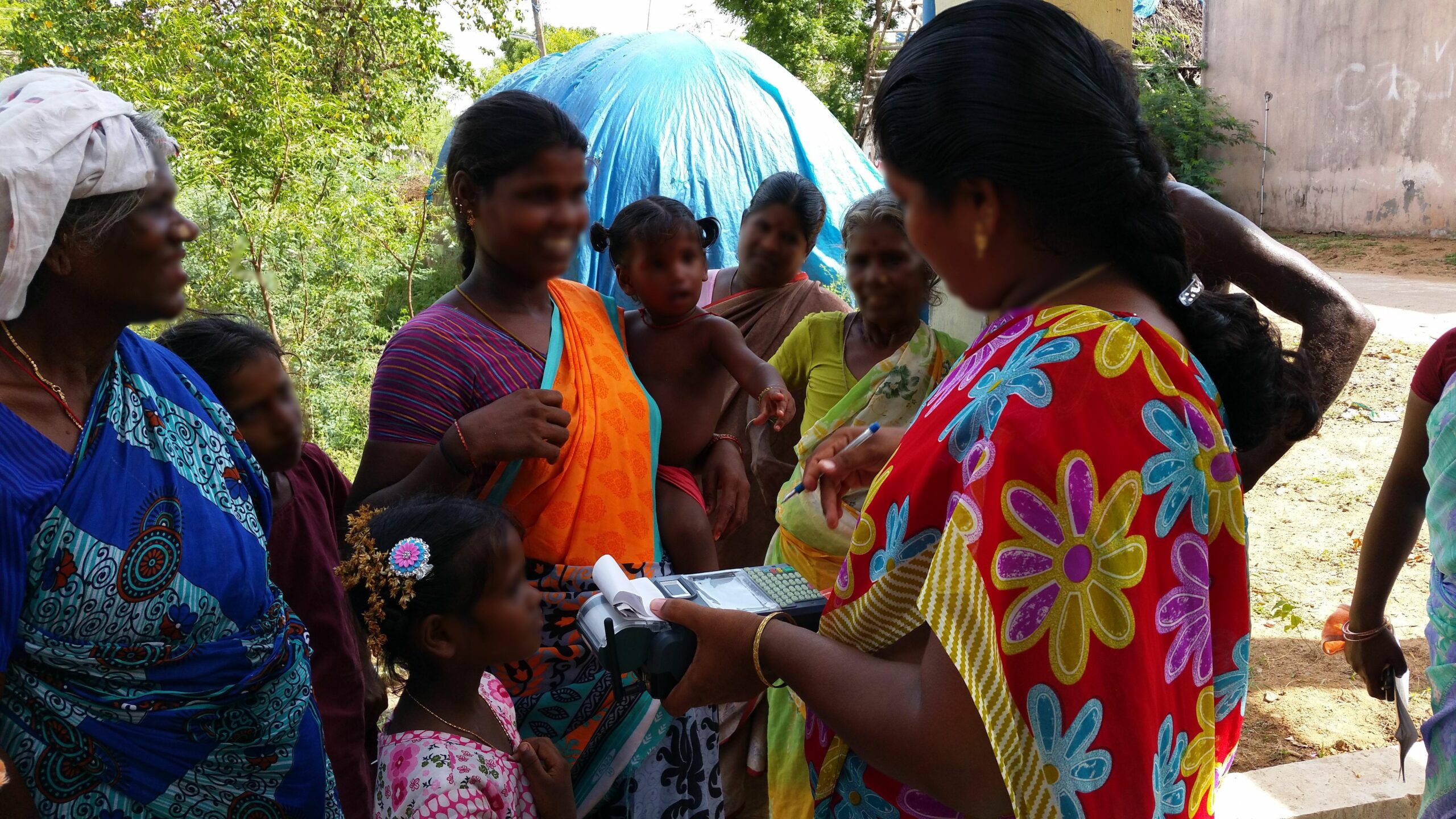
At the same time, evidence from countries including India (see also Dvara Research’s submission to IFC) and Cambodia points to severe social impacts associated with saturated lending markets and rising household indebtedness: intense repayment pressure resulting in multiple borrowing, distress-driven asset and land sales, reduced spending on food and healthcare, enduring psychological stress, and in extreme cases reports of debt-related suicides. These concerns were also the subject of a complaint to the Compliance Advisor Ombudsman involving 13 IFC-supported microfinance projects in Cambodia.
The letter argues that an important gap persists between IFC’s broad sustainability principles and the treatment of borrower harm in practice. Under the current framework, microfinance borrowers are not explicitly recognized as affected stakeholders, meaning that over-indebtedness risks do not appear to be systematically integrated into due diligence, risk categorization, and supervision processes – even in markets already experiencing debt distress.
One example highlighted in the briefing notes is IFC’s 2025 investment in CreditAccess Grameen in India. Despite an ongoing over-indebtedness crisis and reporting that many borrowers held loans from multiple lenders, the project received an FI-3 classification, indicating “minimal or no adverse environmental or social impacts.” More generally, there appears to be a paradoxical tendency in risk classification: the more economically vulnerable borrowers are, the lower the perceived social risk often appears to be.
In line with sector-wide established “do-no-harm”-principles and core human rights standards, the researchers call for borrower-related risks – including over-indebtedness and adverse social impacts – to be more explicitly integrated into IFC’s Sustainability Framework. Their recommendations are as follows:
- IFC’s environmental and social (E&S) risk assessment and supervision should explicitly address lending-related risks such as over-indebtedness, debt distress, and borrower protection.
- Borrowers in MSME, housing, consumer, and digital lending should be recognized as affected communities, particularly where vulnerable groups are targeted.
- Borrowers should be consulted throughout the investment cycle to assess risks and impacts and validate project assumptions.
- E&S FI risk categorization should include borrower well-being risks, including market saturation, indebtedness, affordability, repayment practices, and restructuring policies. Existing Client Protection Standards alone are insufficient.
- Microfinance institutions should establish an E&S Management System (ESMS) to monitor and mitigate over-indebtedness risks.
- IFC’s exclusion list for microfinance should cover over-saturated markets, excessive loan costs, and inadequate restructuring practices.
The researchers further argue that existing Client Protection Standards (CPS) are not sufficient on their own, as they primarily assess policies and procedures rather than actual implementation outcomes and borrower-level impacts.
As household indebtedness becomes increasingly intertwined with financial inclusion models worldwide, the current review may serve as an important test of how development finance institutions operationalize their own “do no harm” commitments in practice.
You can read the full submission here.