Joint statement on IFC’s Cambodia Decision and the Integrity of Financial Inclusion
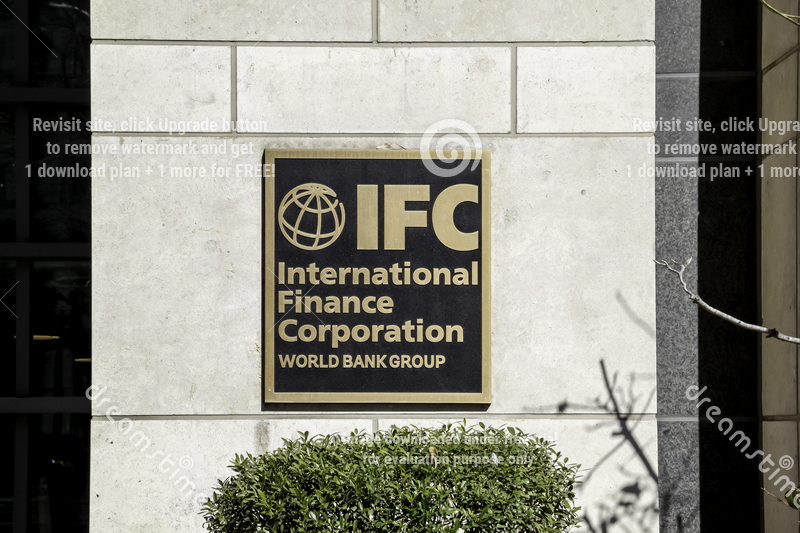
37 leading microfinance experts, civil society organizations, and borrower protection practitioners have issued a joint statement following the IFC Board’s decision this week to exclude ongoing and future microfinance financial consumer protection complaints from the mandate of IFC’s independent accountability mechanism, the Compliance Advisor Ombudsman (CAO), pending discussion of the relevant policy issues. They warn that these decisions have serious implications for microfinance borrower protection and the credibility of responsible financial inclusion.
You can read the statement here
The statement responds to the CAO’s compliance investigation into IFC-supported microfinance investments in Cambodia, published on 24 June. Drawing on the IFC Sustainability Framework, the CAO found that IFC failed to exercise adequate due diligence and supervision of six Cambodian microfinance institutions whose harmful lending and debt collection practices contributed to over-indebtedness and severe microfinance borrower harm. It recommended effective remedies for complainants and stronger safeguards to prevent future harm.
Rather than addressing these findings, the IFC Board argued that microfinance borrower-related risks fall outside the scope of the Sustainability Framework and has now suspended the CAO’s ability to process complaints relating to financial consumer protection in microfinance.
The signatories argue that, in doing so, the Board has overridden the CAO’s independent compliance determination, contrary to the role assigned to the CAO under the Board-approved CAO Policy. They warn that these decisions undermine the credibility of IFC’s accountability framework and distance IFC from its responsibility and accountability towards the very microfinance borrowers its financial inclusion investments are intended to support. They further argue that these decisions create a widening gap between IFC’s commitment to protect poor and vulnerable people and its due diligence, supervision, and governance practice, while risking uncertainty about the standards expected of financial intermediaries across the financial inclusion sector.
The statement therefore calls on the IFC Board to respect the CAO’s independent compliance function, reaffirm that financial consumer protection forms part of the Sustainability Framework, ensure effective due diligence and supervision of IFC clients’ lending and debt collection practices, and keep complaints relating to financial consumer protection in microfinance within the CAO’s mandate.
Organizations, grassroots groups, experts, and practitioners who share these concerns and wish to support the statement are invited to add their names as signatories by completing this form.
Signatories
Researchers
- Amali Wedagedara, Bandaranaike Centre for International Studies (BCIS), Sri Lanka
- Anil Shah, University of Kassel, Germany
- Arnaud Natal, University of Bordeaux, France
- Balihar Sanghera, University of Kent, United Kingdom (UK)
- Catarina Morawska, Universidade Federal de São Carlos, Brazil
- Deborah James, London School of Economics (LSE), United Kingdom (UK)
- Isabelle Guérin, French National Research Institute for Sustainable Development (IRD), France
- Jeffrey Ashe, Columbia University, USA
- Jonathan Morduch, New York University, NYU Financial Access Initiative, USA
- Katherine Brickell, King’s College, London, United Kingdom (UK)
- Magdalena Villarreal, Centro de Investigaciones y Estudios Superiores en Antropología Social, México
- Marc Labie, Centre Européen de Recherche en Microfinance (CERMi), Belgium
- Marek Hudon, Centre Européen de Recherche en Microfinance (CERMi), Belgium
- Maren Duvendack, University of East Anglia, United Kingdom (UK)
- Milford Bateman, Freelance Researcher and Consultant, Croatia
- Nithya Joseph, Independent Researcher, India
- Nithya Natarajan, King’s College, London, United Kingdom (UK)
- Philip Mader, Institute of Development Studies, United Kingdom (UK)
- Rajalaxmi Kamath, Indian Institute of Management Bangalore
- Sébastien Michiels, French Institute Pondicherry, India
- Solène Morvant-Roux, Université de Genève, Switzerland
- Sophia Cramer, University of Lucerne and Independent Researcher, Germany
- Tomás Nougués, Universidad Nacional de San Martín, Argentina
- Ujan Natik, University of Manchester, United Kingdom (UK)
- Vincent Guermond, Queen Mary University of London, United Kingdom (UK)
- W. Nathan Green, National University of Singapore
Research Organizations
- Observatory of Rural Dynamics and Inequalities in South India (ODRIIS)
Civil Society Organizations and Borrower Protection Practitioners
- Debt Justice, United Kingdom (UK)
- Association for Farmers Rights Defense, AFRD Georgia
- Law and Society Trust, Sri Lanka
- Centre for Policy Alternatives, Sri Lanka
- A.R. Vasavi, Punarchith Collective, India
- Sharada Gopal, Jagruta Mahila Okkuta, India
- The Global Alliance for Legal Aid, USA
- Facing Finance, Germany
- Accountability Counsel, International
- BankTrack, Netherlands
For further information or media inquiries, please contact:
- Isabelle Guérin, French National Research Institute for Sustainable Development (IRD): isabelle.guerin@ird.fr
- Sophia Cramer, Independent Researcher: sophia.cramer@posteo.de